
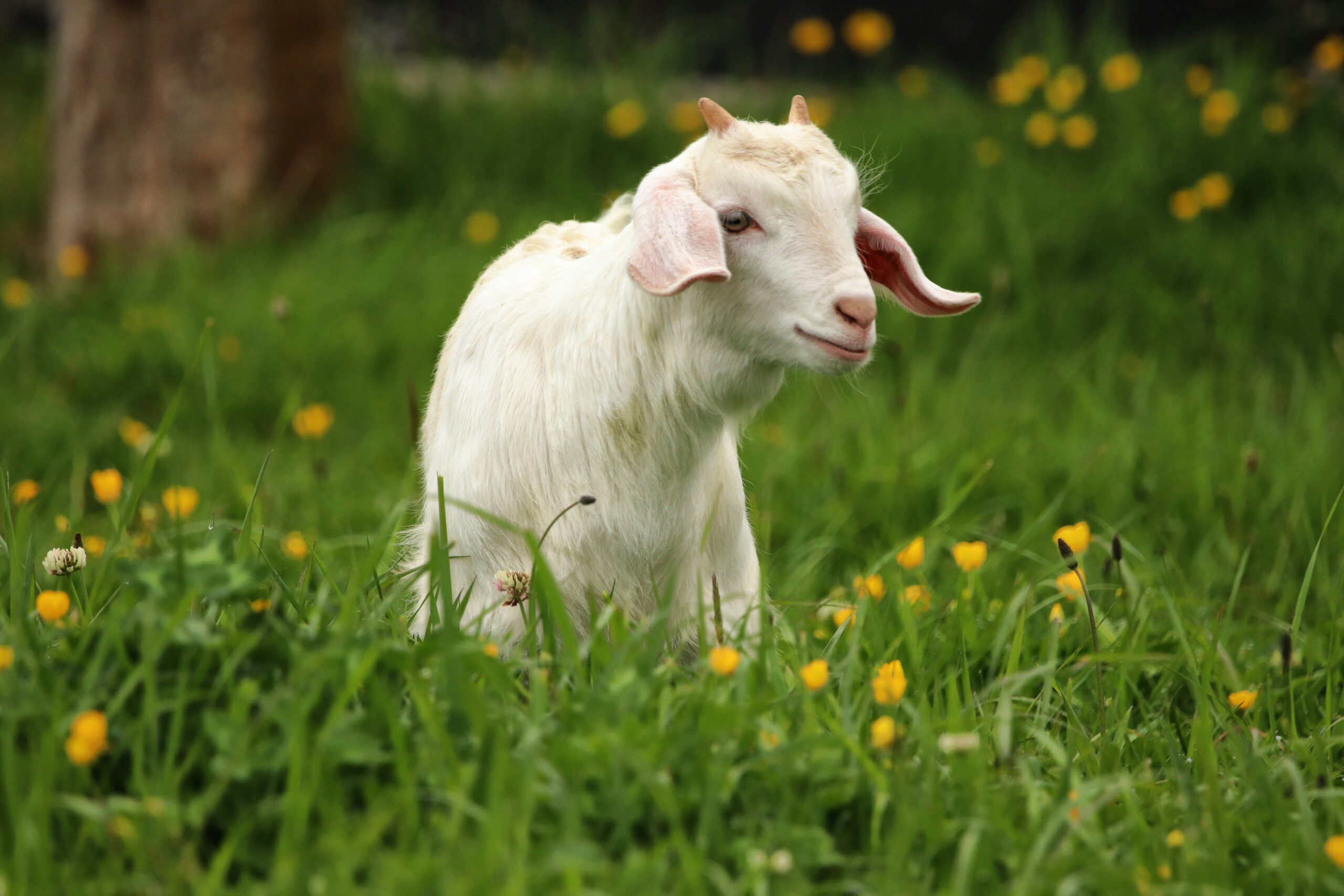
Goats
Small producers rear goats to produce meat, dairy and fibres. Goats can be combined with other types of farming, and the scale of herds varies widely.
Goat farming is a form of livestock management and comes with legal responsibilities on caring for the animals’ welfare throughout the year. Managing herd health is a critical part of goat farming, and to sell meat or milk you will also need to comply with food safety regulations.
Updated 7 June 2026


Managing goats
As a goat farmer, you must manage your herd actively to ensure their welfare.
Tagging
You must tag all your goats before they are 9 months old (6 months if kept indoors), or they leave your farm.
There are two types of identifier tags: electronic and visual. Both tags come in different types (e.g., ear tag), and you can read more about tag types here. To buy tags, you need your herd mark and CPH number. You can only buy from suppliers approved by DEFRA: see the list of approved tag suppliers.
Goats kept beyond 12 months of age need two tags – you can read about the combination of tags which is acceptable here. These tags have the animal’s individual identifier number – you will get it from the supplier when ordering tags.
You must replace any lost tags within 28 days from noticing that they are missing. There are specific rules for purchasing and recording replacement tags.
The Scottish Government has detailed guides on tagging goats, including advice on how to tag:
- Sheep and goat identification and traceability, Scottish Government
- Livestock identification and traceability: Sheep and goats, Scottish Government
Public access
In Scotland, members of the public have access rights over open pasture. You must not allow working dogs to intimidate people, and where a core path or public right of way goes through your land, you cannot obstruct it.
Read more:
- Public Access and Land Management, Natural Heritage Management
- ‘Unfenced grassland with farm animals’, Scottish Outdoor Access Code
Protected areas
If your land has any semi-natural areas or uncultivated land, you cannot modify these without first asking your local planning authority whether an Environmental Impact Assessment is needed. This link relates to buildings, but it will enable you to find contact details for your local planning authority.
If your grassland is within a Site of Special Scientific Interest (SSSI), you need to check if there are any management guidelines for grassland habitat in the site and follow them. Find out more and see a map of SSSIs on NatureScot.
If your land is located within a Special Area of Conservation (SAC) or a Special Protection Area (SPA) additional regulations will apply. You must ensure that your land use or management practices do not harm the protected habitats or species. If you’re planning any development or changes to the land, you should speak to your local planning authority to ensure compliance with these protections.
The Protection of Badgers Act 1992 makes it an offence to interfere with or damage a badger sett, including disturbing badgers or blocking sett entrances. If you have badger setts on or near your land, you must seek advice from NatureScot or your local wildlife authority before carrying out any work near these areas.
Feeding and Grazing
Goats should receive a balanced diet and have access to sufficient, fresh, clean water ideally at all times. Where continuous access is temporarily impractical, water should be provided twice daily.
Goats are particularly susceptible to listeriosis, which can be the result of eating poor quality or mouldy silage or haylage, therefore feeding silage and haylage should be avoided.
To store and use goat feed, you must normally register as a feed business – see ‘Feed business registration’.
Read more:
Shearing
Shearing recommendations for goats vary by breed:
- Angoras are shorn every six months, usually in spring (before kidding) and in autumn (before breeding).
- Cashmere goats are combed annually.
- Dairy/meat goats generally do not need shearing unless matted.
Goats are particularly susceptible to changes in temperatures, and should only be shorn in suitable weather conditions, unless housed.
If poor weather conditions occur after shearing, protection by housing or by the use of a coat should be provided.
When shearing your goats, care should be taken not to nick or cut the skin. If a wound does occur, immediate treatment should be given to avoid infection.