
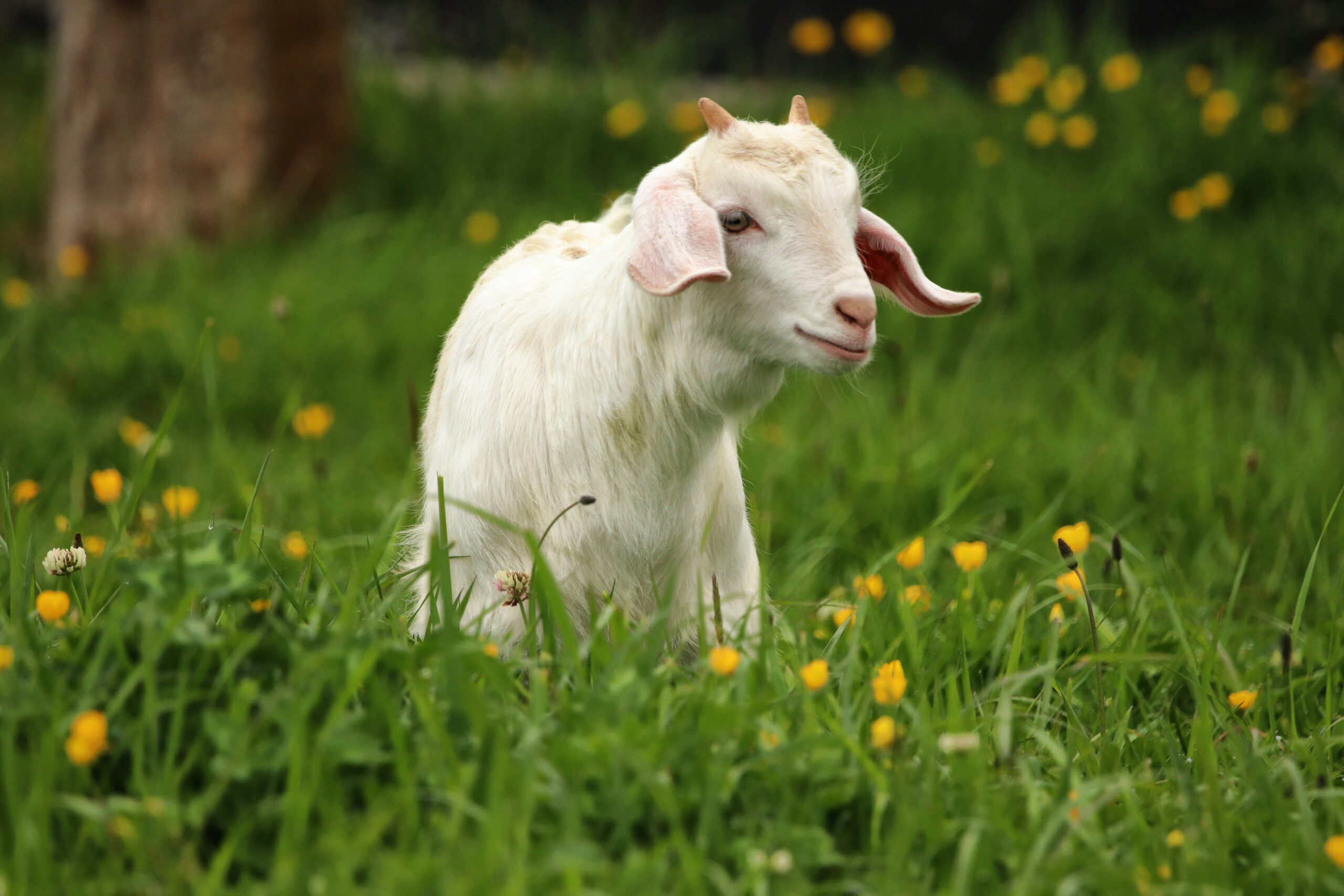
Goats
Small producers rear goats to produce meat, dairy and fibres. Goats can be combined with other types of farming, and the scale of herds varies widely.
Goat farming is a form of livestock management and comes with legal responsibilities on caring for the animals’ welfare throughout the year. Managing herd health is a critical part of goat farming, and to sell meat or milk you will also need to comply with food safety regulations.
Updated 7 June 2026


Maintaining herd health
As a livestock keeper, you have a legal duty to care for the health and welfare of your goats. Implement a ‘herd health plan’ to prevent disease, and control disease spread by checking goats before they are moved and isolating any new goats brought to your farm.
You must attend to goats appearing to be ill or injured without delay and call the vet if they do not get better or get worse.
Goat movement restrictions
When you move goats to your farm, you then cannot move any goats from your farm for 13 days – this is a legally required standstill period. There are exceptions (such as moving goats directly to slaughter) and you can get an exemption by isolating the incoming goats, but you need to apply for an exemption with this form to your local RPID office.
Read about goat movement restrictions and isolation measures on the Scottish Government website. Check ‘Moving goats’ for records you need to keep when moving goats.
Body Condition Scoring
Body condition scoring (BCS) is a technique to quickly assess the condition of an individual goat. In condition scoring, you use your hands to assess how much muscle and fat the animal has.
Read more about BCS:
Body Condition Scoring in Goats
Goat diseases
Goats are affected by many diseases, and you should focus on disease prevention by implementing herd health and biosecurity plans. If poorly managed, disease can lead to death.
Information about approved disinfectants for animal diseases can be found in the Diseases of Animals (Approved Disinfectants) (Scotland) Order 2008.
Further resources:
- ‘Disease prevention for livestock and poultry keepers’, DEFRA
- Sheep and goats: health regulations, DEFRA
Notifiable diseases
If you suspect that your goat has any of the notifiable diseases, you are legally required to immediately tell your local APHA Field Services team by contacting them.
Notifiable disease affecting goats include:
There are also some diseases you must report to APHA. See the full list of notifiable and reportable animal diseases.
Medicines
Sometimes it is necessary to medicate your goats to prevent or cure disease. Animal medicines should be stored and handled carefully, as they are dangerous to people or goats if mishandled.
When using veterinary medicines, you must comply with the Control of Substances Hazardous to Health (COSHH) Regulations 2002 (COSHH). The Health and Safety Executive has published a guide on how to use animal medicines safely and comply with COSHH regulations.
You can only use veterinary medicines authorised by the Veterinary Medicines Directorate – see the directory of approved veterinary medicines. Some medicines can only be prescribed by vets.
As medicines licensed for goats specifically for goats are limited, drugs will be prescribed by a vet under the cascade system. You should refer to Schedule 4 of the Veterinary Medicines Regulations 2013, which covers this system.
If your goats produce meat or milk, you cannot sell produce from the animal before the end of the medicine withdrawal. Read more about medicine residues on Food Standards Scotland. Withdrawal periods can be found on the datasheets available on the Noah Compendium, however as most medicines are not licensed for goats and will be prescribed under the cascade system, withdrawal periods will need to be advised by the prescribing vet.
You must keep records of medicines given to your goats (see ‘Medicine records’).
Read more:
‘Veterinary medicines’, Health and Safety Executive
Vaccinations
Vaccinations are not legally compulsory but are an important part of disease prevention. Incorrect vaccination technique can kill a goat, and it is a good idea to get training or advice from an experienced goat keeper or vet.
Find out more about vaccinations:
‘Safe and effective vaccination’, Farm Advisory Service
Following the withdrawal of Lambivac, there are currently no licensed clostridial vaccines for use in goats in the UK. Alternative clostridial vaccines are available off license, but this should be agreed with your vet.
The Goat Veterinary Society recommends that vaccination with any clostridial vaccination is better than no vaccine at all.
More information is available here:
Goat Veterinary Society – Statement on Clostridial Vaccination of Goats following the discontinuation of Lambivac
Worms
Goats are susceptible to internal parasites (worms), particularly when grazing pasture that is also used by sheep or cattle. Unlike sheep, goats do not develop strong natural immunity to worms, so active management is essential.
Worming should be carried out based on need rather than routine, as over-use of wormers can lead to resistance. Monitoring tools such as faecal egg counts (FECs) can help determine when treatment is required and whether it has been effective. Good grazing management can help to reduce the need for wormers.
Dosages for goats are often higher than for sheep due to their faster metabolism, so professional guidance is important.
Most wormers for goats must be purchased directly from a vet under the cascade system, and cannot be obtained from other sources.
Find out more:
British Goat Society – Worms
Foot Care
Regular foot care is essential for maintaining mobility, comfort and productivity in goats. Goats’ hooves grow continuously and require routine inspection and trimming to prevent overgrowth, lameness and infection.
If foot rot or persistent lameness is suspected, affected goats should be isolated and treated promptly, and veterinary advice sought if the condition does not improve.
Castrating goats
Castration must be carried out by a trained operator in strict accordance with the law. Only a vet may castrate a kid which has aged two months or over.
Dehorning or disbudding
These operations must be carried out by a veterinary surgeon and must be carried out with appropriate anaesthesia and pain relief.
If disbudding is to be carried out, this should be done at the earliest possible age – 2 to 3 days is ideal but not later than 10 days. Dehorning an adult goat is a stressful procedure and should be avoided.
Euthanising goats
It can be necessary to euthanise a critically ill or injured goat on your farm to prevent suffering. It is a general offence to cause avoidable suffering to an animal when euthanising it, and only a competent person should do this.
Acceptable methods depend on the age and size of the goat and must comply with WATOK regulations.
Fallen livestock reporting and disposal
Dead goats, including kids, must be disposed of appropriately. In most of Scotland, they cannot be buried or burnt in the open because of the risk of disease spread through groundwater or air pollution. Fallen stock must be disposed without ‘undue delay’ (usually within 48 hours of death). There are a number of disposal options available.
Some remote areas of Scotland have been granted exception to bury dead animals if other disposal options are not available. For more details of the areas and methods of disposal please see the guidance.
You can make your own arrangement with the collector or use the National Fallen Stock Company which connects farmers and collectors.
Before collection, store the carcass securely and keep it away from animals and birds. Read more about legal requirements around fallen stock on DEFRA website
Goat deaths must be recorded in the holding register within 36 hours of discovering the death.