
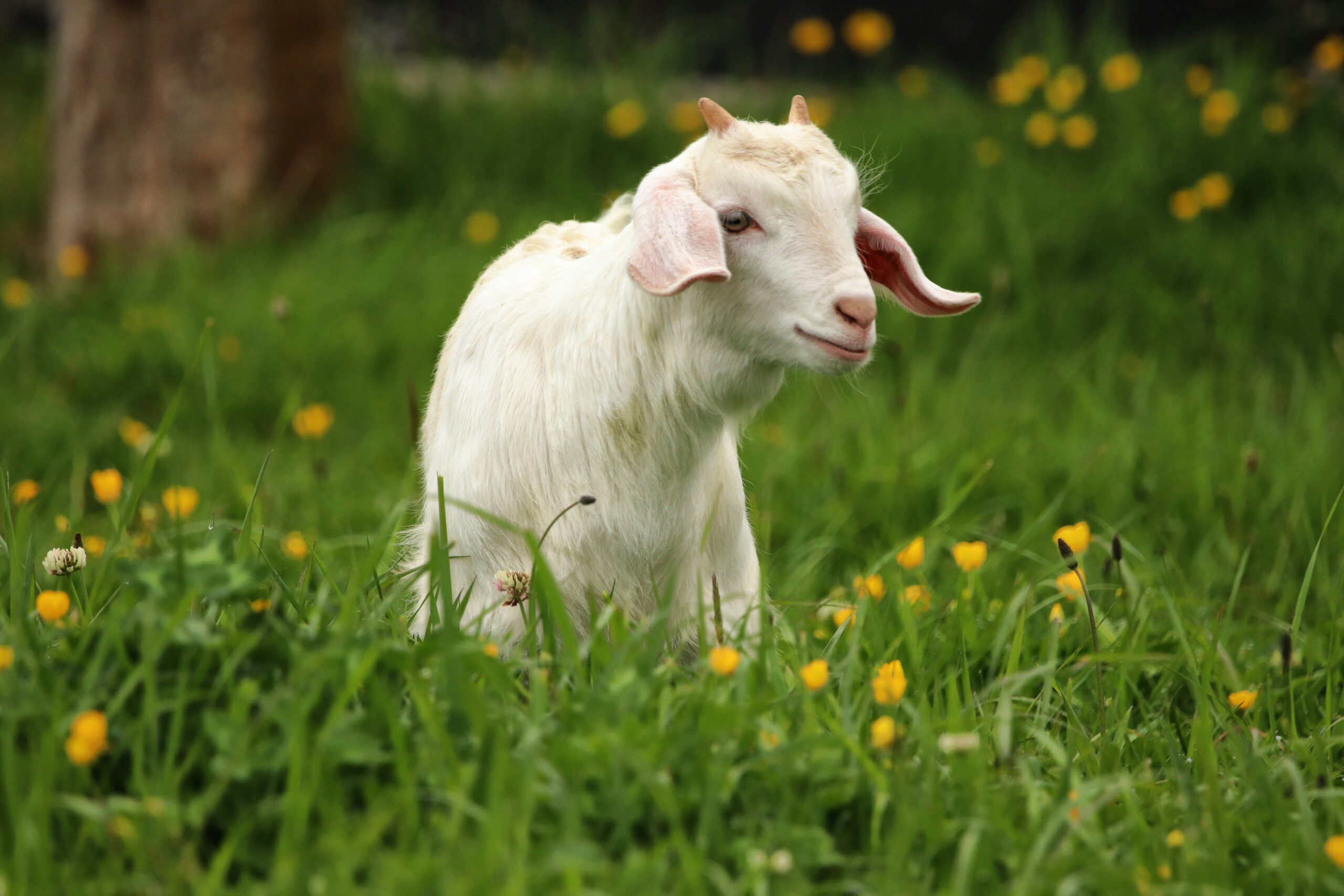
Goats
Small producers rear goats to produce meat, dairy and fibres. Goats can be combined with other types of farming, and the scale of herds varies widely.
Goat farming is a form of livestock management and comes with legal responsibilities on caring for the animals’ welfare throughout the year. Managing herd health is a critical part of goat farming, and to sell meat or milk you will also need to comply with food safety regulations.
Updated 7 June 2026


Establishing a goat farm
Site selection
When selecting your site, you need to consider the animals’ welfare needs as well as other practical and regulatory factors. Goats are particularly sensitive to cold, wet and draughty conditions, therefore site choice is critical for their health and productivity.
Key considerations include:
- Access to a reliable water source
- Shelter from wind, rain and extreme weather at all times
- Well-drained ground
- Logistics, for example, access to feed deliveries, proximity to an abattoir (if relevant).
Location
Goats can be kept successfully across much of Scotland, but upland or very exposed sites may require additional investment in housing and shelter that can withstand high winds and heavy snow load. Land which also has natural shelter (hedges, woodland, banks) and free-draining soils is preferable, but housing will still be required.
Size
You are required to ensure that your goats have enough space, so that their welfare is not compromised. The amount of land that you need therefore depends on multiple factors, including:
- Herd size (how many goats you have in total)
- Stocking density (how many goats you have on a piece of land)
- What land and herd size you have capacity to manage well
Minimum requirements:
- If penned separately each goat should have about 4sq.m. of floor space – horned and hornless/disbudded goats should be penned separately.
- If goats are housed in a group, 2sq.m. per goat should be provided.
- Pen and door heights vary according to breed – 1.3m is a recommended average.
- A well-fenced yard/paddock should be at least three to four times the area of penning.
Organic certification
Both your land and animals must be managed to organic standards. If the farmland you buy is not organic, you need to go through a two-year conversion process.
Organic goats must be fed mostly from your farm, and there are additional conditions for grassland and stocking rate to consider when deciding your farm size and location.
Find out more:
Soil Association – Conversion guide- livestock and poultry
Housing & shelter
Before keeping any goats, it is essential that you have an adequate shelter for them. Goats must have access to shelter at all times, but especially during harsh winter conditions or prolonged wet conditions. Their coats are not waterproof and being outside for too long in poor conditions can result in pneumonia.
There are several options for housing goats – advice on welfare aspects should be sought when building a shelter or repurposing another agricultural building.
The code of recommendations for the welfare of goats requires that goats have access to a yard or pasture, weather and ground conditions permitting. Adequate space is particularly important for kidding females.
Indoor housing for livestock has legal minimum requirements, including what materials you can use and recommended stocking densities. If goats are individually penned, it is important for their wellbeing to make sure that they can see each other.
Tethering is not recommended, and kids should never be tethered. It requires a high degree of supervision and can cause distress or injury to the animal.
Organic standards also often set additional rules for housing, such as minimum lying areas for animals. Organic goats cannot be housed indoors permanently.
Read more:
British Goat Society: Housing
Facilities
You must have adequate facilities to provide your goats access to shelter, food and water, as well as manage their health and production.
Water
If you take water for your farm from natural sources, such as a river or groundwater, you might need to register or get a permission from the Scottish Environmental Protection Agency (SEPA).
- For taking 10m3-50m3 water per day, you need to register with SEPA which is free.
- For taking above 50m3 water per day, you need a Controlled Activities Regulations (CAR) licence which has a fee.
You can register or apply for a water licence on SEPA’s website, which also has guidance available.
Helpful resources for understanding and planning your farm water requirements:
- DIY full water audit pack, AHDB
- ‘Water supply problems? A guide for livestock farms’, AHDB
- Table of water needed for livestock, Environment Agency
Your herd
Breed selection
When choosing goat breeds, consider:
- Your production goals (milk, meat, fibre or mixed)
- Suitability to Scottish climate and housing
- Temperament and handling requirements
- Availability of breeding stock and market demand
Some dairy breeds require higher inputs and housing standards, while hardier or native-type goats may be more suitable for low-input systems.
More information:
British Goat Society – BreedsBritish Goat Society – Breeds
Purchasing goats
When buying goats, you should ensure that:
- Animals are correctly identified and accompanied by movement documentation
- You register your holding and comply with goat identification and movement rules (see, transporting goats)
- You source stock from herds with good health status and known disease history
- It is advisable that when buying goats, you buy from a herd that has received a whole herd negative CAE certificate dated within the last year.
A quarantine period for incoming animals is strongly recommended to protect herd health.