
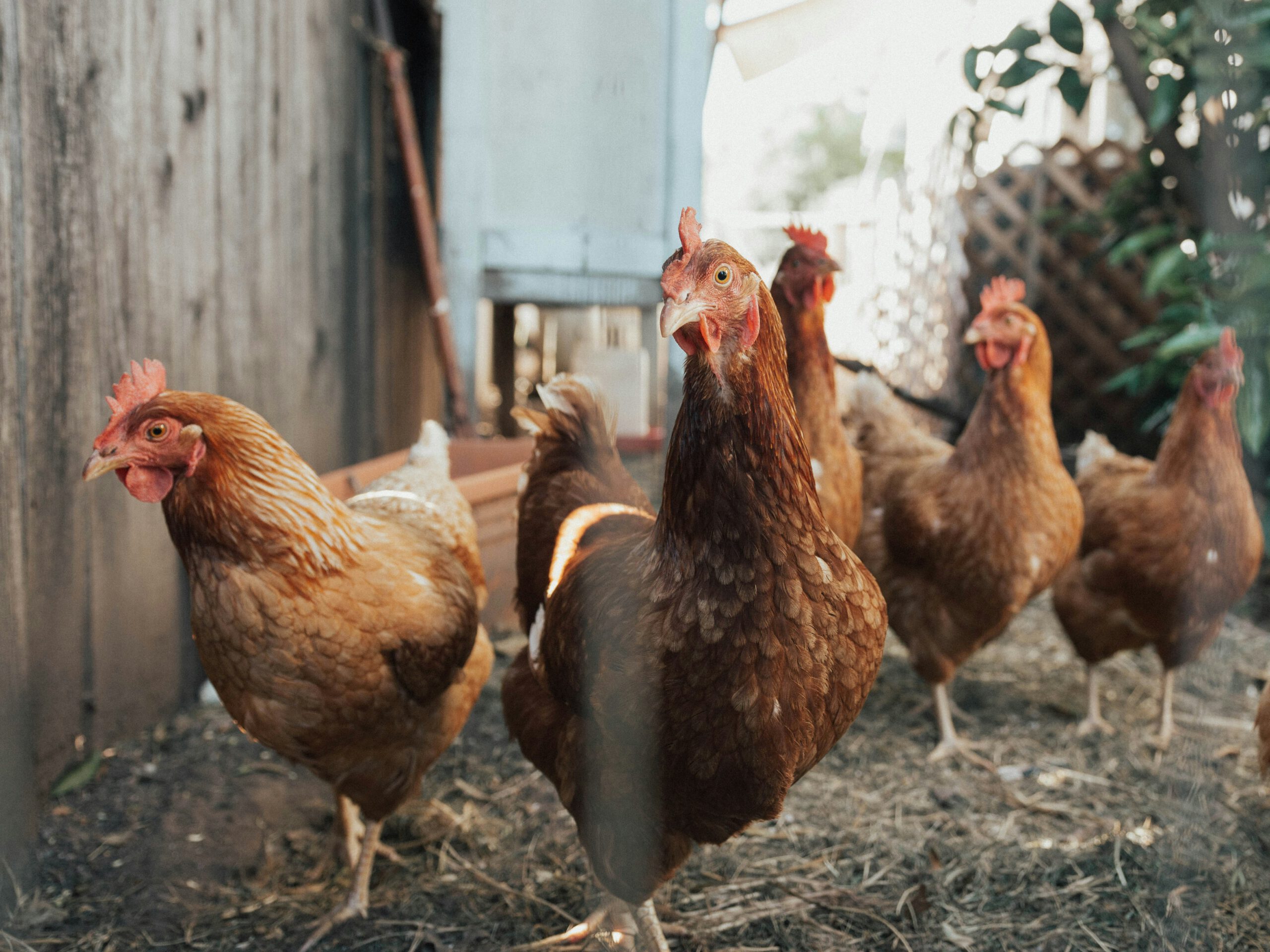
Meat chickens
Keeping chickens for meat is popular with smallholders and crofters, and many people in Scotland keep a couple of chickens in their backyards for personal use. Chickens can be kept alongside other livestock, combined with market gardening, and kept in a variety of spaces.
Updated 7 June 2026


Managing chickens
You must manage your flock actively to ensure their welfare and check on your chickens at least once a day. If your chickens have access to outdoors, you must also ensure that their coop is locked during the night after they gather to roost, to keep them safe from predators.
If you go on holiday, you must get a responsible person to check, feed and water them for you each day.
Feeding & watering chickens
You are legally responsible for providing your chickens a nutritious diet that supports their wellbeing. Chickens are sensitive to sudden changes in their feeding, and it is important to establish a routine and only change it gradually.
You must feed your chickens at least once a day, or at regular intervals, and ensure that they have enough water available at all times.
Make sure to keep feeding and drinking equipment clean, and protect them from wild birds and rodents. Remove old feed, and replace drinking water daily.
Chickens also need grit to digest food properly, and can be given soluble grit to supplement calcium. Read more about using poultry grit.
To be certified organic, you may need to feed your chickens only organically produced feed and manage their pasture through organically approved methods. Check with your organic certifying body for specific requirements.
Read more:
- ’Feeding Chickens’, Poultry Keeper
- ’Drinking Water Quality and Dehydration’, Poultry Keeper
- ’Poultry food & drink’, Accidental Smallholder
Feed restrictions
- You must not feed mealworms or catering/kitchen waste to your chickens.
- Check which foods are poisonous to chickens
- If you give them animal feed, you must register as a feed business (see ’Feed business registration’).
Monitoring food & water
It can be helpful to have feeding and watering equipment (like water meters) that allow you to monitor how much your chickens are eating and drinking. This helps you to detect any problems in their health early on.
Body weight is also a useful indicator of potential problems with their diet or health.
Foraging
If your chickens have access to a pasture, they can get some of their food by foraging and you can improve the quality of their forage by planting specific plants. The Organic Research Centre has published a technical note on poultry foraging from the range, which is a useful starting point for understanding how to do this.