
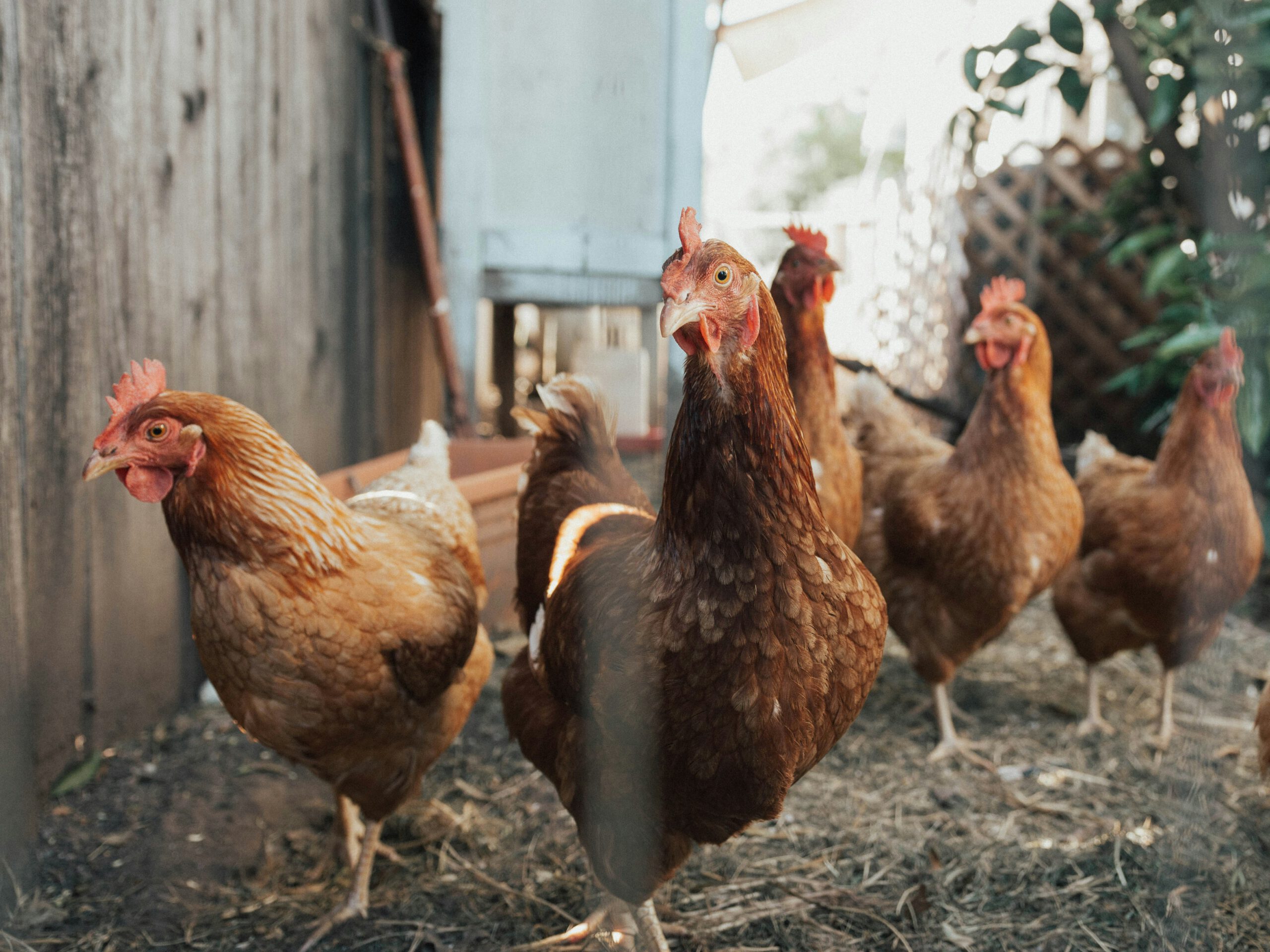
Meat chickens
Keeping chickens for meat is popular with smallholders and crofters, and many people in Scotland keep a couple of chickens in their backyards for personal use. Chickens can be kept alongside other livestock, combined with market gardening, and kept in a variety of spaces.
Updated 7 June 2026


Becoming a producer
Once you plan to keep chickens, you must organise essential registrations, insurances, and other administration.
Land registration
You must register your agricultural land and business with the Rural Payments and Inspections Division (RPID) even if you do not withdraw subsidies.
You must register within 30 days from the date you first keep chickens. It is free and requires basic information about your smallholding/croft/farm.
Register your land with RPID online or complete this form.
You will get two numbers:
- Business Reference Number (BRN) for your farm/croft business
- County Parish Holding (CPH) number for your land. You need this number to register your flock and report any movements of animals.
If you need help, contact your local RPID office.
Flock registration
Anyone who keeps birds, even a single bird, must register on the Scottish Kept Bird Register (SKBR). This is a legal requirement. Once registered, you need to make sure your details are kept up to date.
Feed business registration
If you sell meat from chickens, you must register as a feed business with Food Standards Scotland (FSS) to store and give your chickens animal feed. You can register as a feed business online, and it is free.
There are some exemptions which may apply to small producers, for example if you are feeding food-producing animals kept solely for domestic consumption. A list of all exemptions can be found here.
Setting up your business
If you earn more than £1,000 per year from farming/crofting you need to register as a sole trader, or set up a business partnership or a limited company. You will also need to pay income tax on your profits and keep records. You might also want to draft a business plan to keep track of your accounts – this guide by the Landworkers’ Alliance is a good starting point.
Rural Payments and Services has an explainer of different types of farm businesses.
Insurances
Getting a general liability insurance will cover other people getting injured because of your operations or produce, and you may consider income protection/personal accident insurances. Some insurers also offer specialist packages for smallholders.
You may also look into the availability of insurance for avian influenza outbreaks which, depending on the size of your flock, can incur significant expenses for culling chickens and disinfection (see ’Control of notifiable avian diseases’).
Certifications
You can apply for certifications, which come with additional requirements for keeping chickens and allow you to market your meat as meeting specific standards.
Some of the most prominent certification schemes in the UK include:
- RSPCA Assured, animal welfare
- Organic by approved UK organisations, system of production